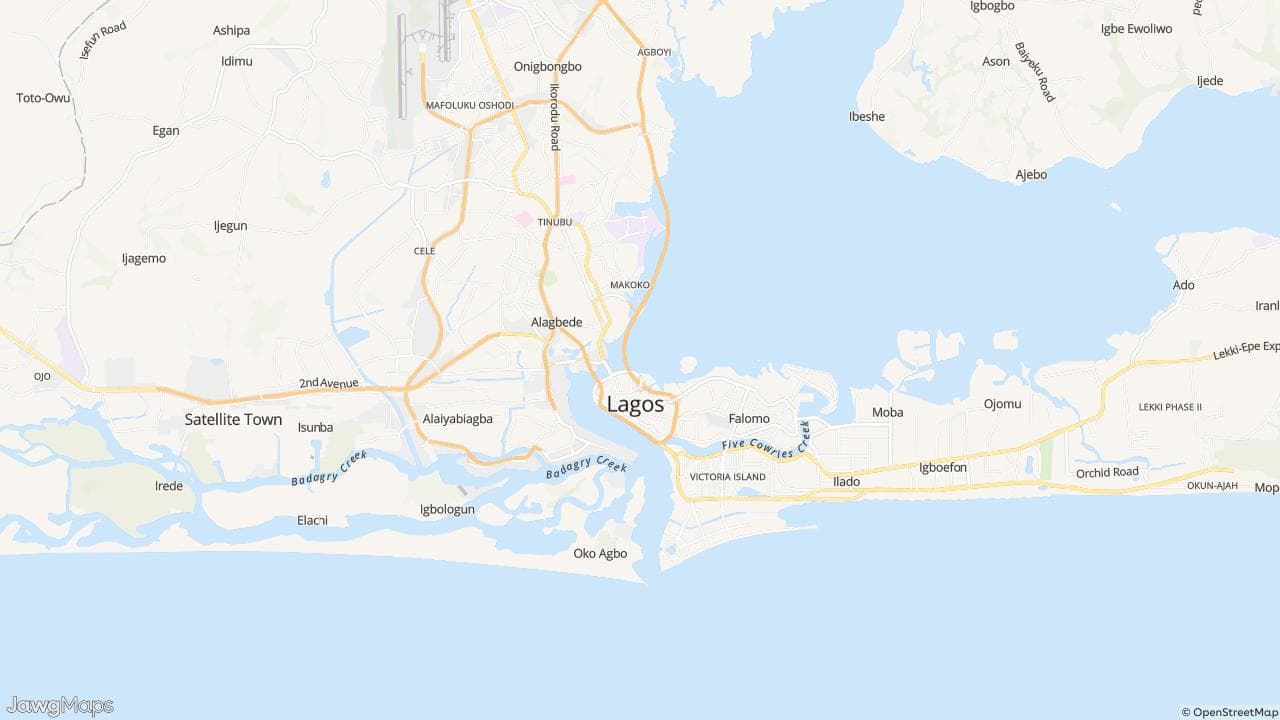
Explore the Map
Get started by clicking the map!
Or search an address to find the closest facilities
Or search a specific facility name to get its destinations and schedules
Map Layers
Active Ferry Facilities
Active Ferry Routes
Other
Flour Mill → Ikorodu/Ipakodo
Operator:
Formal Commercial: Operated by licensed operators (under the jurisdiction/licensed by LASWA or NIWA)
Total duration:
40 min
Types of boats:
Catamaran, Covered, Banana
Flour Mills to Ikorodu/Ipakodo Ferry Terminal (EVENINGS ONLY)
Schedule: Monday – Saturday
| Departure period | Frequency (wait time) |
|---|---|
| 4:00 PM – 6:00 PM | Every 35 mins |
Note: Departure times are estimates, since boats typically wait until they are full of passengers. Schedules are also subject to potential environmental disruptions; see more below.
| Price | |
|---|---|
| Flat rate for all stops | ₦3,500 (Cash) |
Questions about this route
Take a licensed commercial boat from Flour Mills, which reaches Ikorodu/Ipakodo in about 40 minutes for ₦3,500. Boats leave from 4:00 PM from Monday to Saturday.
The Flour Mill to Ikorodu/Ipakodo ferry takes about 40 minutes. It is run by licensed commercial operators, and the full trip costs ₦3,500. The route uses catamarans, covered boats and banana boats. This service runs one way only. For the trip back, see the LagFerry Ikorodu/Ipakodo to Flour Mill ferry.
A ticket for the full Flour Mill to Ikorodu/Ipakodo ferry trip costs ₦3,500 with licensed commercial operators (fare last updated 2026). You can pay by cash. The return trip, the Ikorodu/Ipakodo to Flour Mill ferry, costs ₦4,000. The return trip, the Ikorodu/Ipakodo to Flour Mill ferry, costs ₦4,500.
The first ferry from Flour Mill to Ikorodu/Ipakodo leaves at 4:00 PM from Monday to Saturday. Boats run until about 6:00 PM, with a boat about every 35 minutes.
The Flour Mill to Ikorodu/Ipakodo ferry runs on Saturdays but not on Sundays. The first Saturday boat leaves Flour Mill at 4:00 PM.
Yes. Only covered boats on the Flour Mill to Ikorodu/Ipakodo ferry keep running in the rain, and they stop too if it gets heavy enough to make navigation unsafe. During water hyacinth season, the route is disrupted but keeps running.